



Pawse Wellness
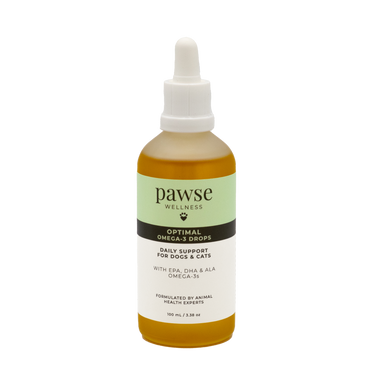
Optimal Omega-3 Drops
Foundational nutrition, simplified.
Pawse Optimal Omega-3 Drops deliver concentrated EPA and DHA to support skin health, coat shine, cognitive function and cardiovascular wellbeing.
Designed to complement our crumble supplements or elevate any dog’s daily wellness routine, these high-quality omega-3s help maintain healthy inflammatory balance and whole-body vitality.
Small addition. Meaningful impact.
Essential support from nose to tail.
products.product.pickup_availability.unavailable
How to use it
One pipette per 5 kg of body weight, once a day, drizzled straight over wet or dry food.
A pipette means one fill: insert, squeeze, release to draw the oil up, then drizzle. Stir it through and serve.
Start gently. For the first week, give around half the dose. Oils are rich, and easing in gives your dog's digestion time to adjust. Build up to the full amount from week two.
Store away from heat and direct light. Refrigerate after opening.
What it supports
- Helps maintain healthy skin and a soft, glossy coat
- Helps maintain normal joint function and mobility
- Helps maintain healthy heart function
- Supports normal brain and nervous system development, and bright eyes
- A daily foundation of the fatty acids dogs cannot make themselves
Suitable for dogs and cats of all life stages. Not a complete food. Feed alongside a balanced diet.
What's inside
Linseed (Flaxseed) Oil
Cold pressed, and the base our blend is built on. Linseed is the richest plant source of ALA, the plant omega-3, which contributes the fats that help maintain a healthy skin barrier and a glossy coat. It also carries the fish oil beautifully and keeps the blend gentle on the stomach.
Fish Oil
The marine half, and the only meaningful dietary source of EPA and DHA. These are the two long chain omega-3s a dog's body cannot produce in useful amounts from plants, and they are the ones behind the joint, heart and brain side of the story.
Two oils. That is the entire list. No fillers, no artificial flavours, no sweeteners, nothing added to mask the taste of an oil that should not need masking.
Shipping and returns
Free shipping on Australian orders over $150. Dispatched from Australia.
Not right for your dog? Get in touch and we will make it right.

Dosing, solved
How much does your dog actually need?
Omega-3 is dosed by body weight, which is exactly why a liquid works and a one size chew does not. Tell us what your dog weighs and we will do the rest.
New to oils? Start at about half the dose for the first week and build up from there. It gives your dog's digestion time to adjust.
Your dog's daily dose
1 mL, stirred through one meal. That is the whole routine.
| Your dog | Daily dose | One bottle lasts |
|---|---|---|
| 5 kg | 1 pipette (1 mL) | about 100 days |
| 10 kg | 2 pipettes (2 mL) | about 50 days |
| 20 kg | 4 pipettes (4 mL) | about 25 days |
| 30 kg | 6 pipettes (6 mL) | about 16 days |
| 40 kg | 8 pipettes (8 mL) | about 12 days |
| 50 kg | 10 pipettes (10 mL) | about 10 days |
The format
Why drops, and not another chew
Omega-3 is one of the few supplements where the amount genuinely matters, and where the right amount depends on the size of the dog. Chews carry a small fixed dose per piece, along with the starches and sugars needed to hold them together. Scaling up for a bigger dog means scaling all of that up too.
A typical omega soft chew
A fixed dose in every piece, plus everything needed to make it a piece. For a larger dog the count climbs, and so does everything that came with it.
One Pawse pipette
One squeeze, straight over dinner. Nothing in the bottle but the oils, and a dose that moves with your dog rather than against them.
01
The dose moves with the dog
A two kilo Chihuahua and a fifty kilo Ridgeback do not need the same amount of anything. A pipette is infinitely adjustable. A chew is decided by a mould.
02
Nothing along for the ride
Two oils in the bottle. No binders, no glycerin, no sweeteners, nothing added to make a shape hold together or to hide a taste.
03
It goes on the food, not into a battle
Drizzled over the meal your dog already eats. No hiding it in cheese, no negotiating, no second event in the day to remember.
The science bit
Not all omega-3 is the same omega-3
Omega-3 is a family, not a single nutrient. Two members of that family do the work most owners are actually after, and a dog cannot make meaningful amounts of either one from plants. They have to arrive ready made, from the sea.
The one most of the canine skin and joint research is built on, and the reason fish oil earned its reputation in the first place. Dogs cannot make it in useful amounts.
Structural rather than functional. DHA is physically built into the membranes of the brain, the nervous system and the retina. It is a building material, which is why it matters in puppies and again in older dogs.
The plant one, and a genuinely useful fat. ALA contributes to the lipids that help maintain a healthy skin barrier, which is why linseed sits at the base of everything we make. What it is not is a shortcut to the other two: dogs convert very little ALA into EPA and almost none into DHA, and cats convert essentially none at all.
Plant omega-3 does not become marine omega-3
In a 2023 trial, dogs were given four weeks of either marine oil or flaxseed oil, and researchers measured how much omega-3 was actually built into their red blood cells.
The marine group's levels rose meaningfully. The flaxseed group took in the most plant omega-3 of anyone in the study, and their levels barely moved.
Lindqvist H, et al. Effect of Different Omega-3 Sources on Blood Omega-3 Index in Dogs. Veterinary Sciences, 2023;10(2):162.
Yes, linseed is first on our label. Here is why. The two omega-3 families do different jobs, so we use both rather than pretending one covers the other. Linseed supplies ALA, which supports the skin barrier directly and makes a gentle, well tolerated base. Fish oil supplies the EPA and DHA that no plant can. What we will not do is count the plant omega-3 towards the marine number, because that is exactly the sleight of hand this section exists to explain.
Purity and freshness
The part of fish oil nobody talks about
Fish oil is a fragile ingredient. Heat, light and time turn it rancid, and rancid oil is not merely unpleasant, it is the opposite of what you bought it for. This is the quiet problem in the category, and it is worth understanding before you buy any bottle. Ours included.
Fish oil supplements bought off Australian shelves and tested in a 2019 university study exceeded the international limit for total oxidation.
Freshness is not a given in this category. It is a choice a manufacturer makes, and then tests for.
Heller M, Gemming L, Tung C, Grant R. Oxidation of fish oil supplements in Australia. International Journal of Food Sciences and Nutrition, 2019;70(5).
What oxidation actually is. Omega-3 molecules have fragile double bonds. Oxygen attacks them, and the oil breaks down into compounds that smell fishy, taste bitter and no longer do the job. Which is why a genuinely fresh oil barely smells of fish at all.
How it is measured. Labs report peroxide value and anisidine value, then combine the two into a single freshness score called TOTOX. The international voluntary standard sets the ceiling at 26. Lower is fresher.
Why a dark bottle and a pipette. Every time a bottle is opened, oxygen gets in. A dropper limits that exchange, opaque packaging keeps light out, and a sensible bottle size means the oil gets used while it is still good rather than sitting half finished for six months.
Small fish, short lives
We use oil from small pelagic species that sit near the bottom of the food chain and live fast. The higher up the chain a fish sits and the longer it lives, the more it accumulates along the way. Choosing small is the simplest way to start clean.
Purified before it is bottled
The oil is refined to strip out heavy metals and environmental contaminants before it ever reaches a bottle, then tested to confirm it worked.
A freshness ceiling we hold ourselves to
We set an internal TOTOX limit well under the international maximum of 26, and batches are checked against it rather than assumed to pass.
Nothing added to hide the taste
No artificial flavouring, no sweeteners, no masking agents. A fresh oil does not need them, and adding them makes it impossible for you to tell when an oil has turned.
Blended and bottled in Australia
Made here, to Australian manufacturing standards, with a far shorter journey between production and your dog's bowl.
Keep it cool, keep it closed
Store away from heat and direct light, cap it properly, and refrigerate after opening. Three seconds of care protects the thing you paid for.
Honest timelines
What to expect, and when
Omega-3 works by being built into cells, and cells are replaced slowly. Anyone promising you a transformed dog by Friday is selling you something else. Here is the realistic version.
Week 1
The routine, not the result
Half dose over dinner while your dog's digestion settles in. Most dogs take to it immediately. Nothing visible is happening yet, and that is exactly right.
Weeks 2 to 4
The coat goes first
Skin and coat are where owners tend to notice first: less flaking, a softer feel, a bit more shine under the light. Full dose from here.
Weeks 4 to 8
Levels are genuinely building
This is the stage where omega-3 is working its way into cell membranes throughout the body. Slow, structural, and the part that actually matters.
Weeks 8 to 16
The steady state
Research on dogs supplemented at a good daily dose shows blood omega-3 levels still climbing out to around sixteen weeks. This is where consistency quietly pays off.
Two things worth knowing up front. Some dogs get loose stools when oils are introduced too quickly, which is why we suggest starting at about half the dose for the first week. And omega-3 only works while you are giving it. The dogs who do best are simply the ones whose owners kept going.
Build the routine
Omega-3 is the base coat. The crumble is the colour.
Every dog needs the same foundation of marine fatty acids. What sits on top of it is where dogs differ. One is anxious in the car. One is slowing down on the stairs. One is simply getting older, and you would very much like that to go well.
The foundation
Optimal Omega-3 Drops
Every dog. Every day. The marine fatty acids a dog cannot make and cannot get from plants.
The targeted layer
One crumble, chosen for your dog
Calm for the worriers. Mobility for the stiff mornings. Longevity for the ones you would like to keep around a very long time.
Same bowl, same meal, about twenty seconds a day.
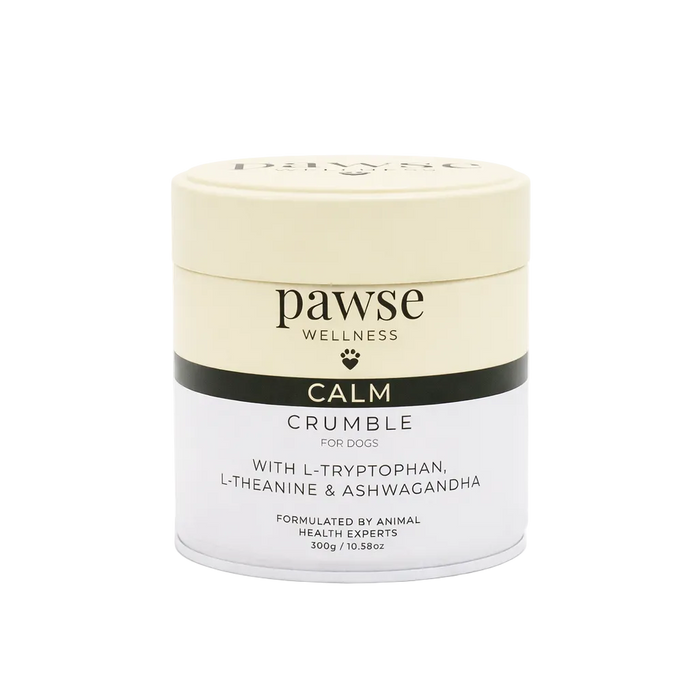
For the worriers
Calm Crumble
DHA is a structural building block of the nervous system itself. Calm works on the day to day response. One helps build the hardware, the other helps with the software.
$99.00
Read the full formula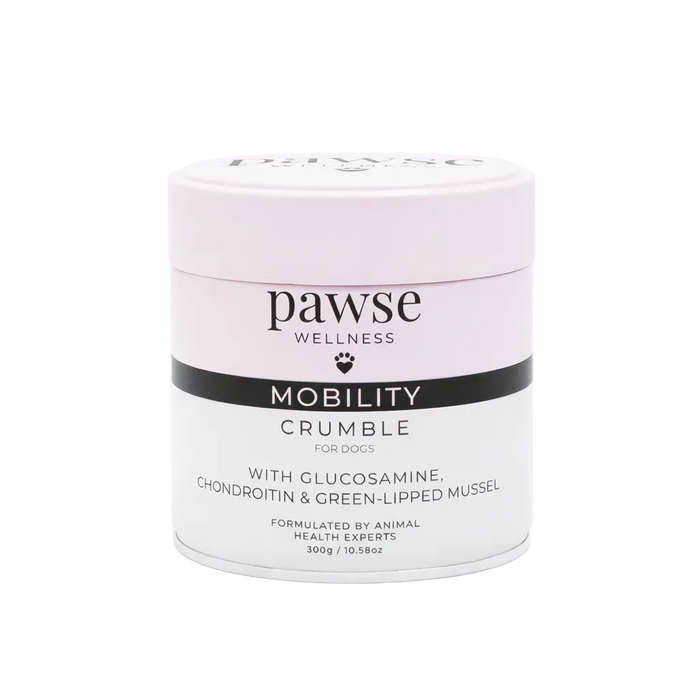
For the stiff mornings
Mobility Crumble
Our strongest pairing. Green-lipped mussel, glucosamine and chondroitin work on the structure of the joint. EPA supports normal joint function around it. Covering both is the whole point.
$99.00
Read the full formula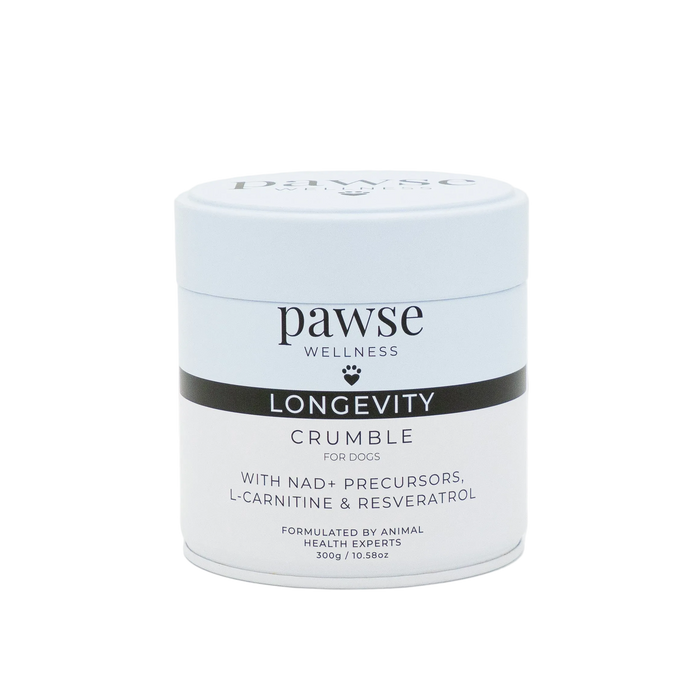
For the long game
Longevity Crumble
DHA is structural fat for the brain and the eyes. Longevity supports cellular resilience. Two halves of ageing well, and better together than apart.
$99.00
Read the full formulaTake all three, and your Omega-3 is on us.
The Complete Care Bundle is every crumble plus these drops, and the saving lands at very nearly the price of one bottle of Omega-3.
If you were going to build the full routine anyway, this is simply the cheaper way to do it.
Questions worth asking
Why does my dog need omega-3 at all?
EPA and DHA are fatty acids that a dog's body cannot produce in useful amounts. They have to come from the diet, and they are built into cell membranes throughout the body, which is why they turn up in conversations about skin, coat, joints, heart, brain and eyes all at once.
Most dog foods contain some omega-3, usually from plant sources. Plant omega-3 is a different molecule to the marine kind, and dogs convert very little of it. That gap is what these drops are for.
How much do I give, and how long will a bottle last?
One pipette per 5 kg of body weight, once a day. Use the calculator further up this page to see the exact dose for your dog and roughly how long a bottle will last them.
Start at about half the dose for the first week, then build up.
Will my dog actually eat it?
Almost always, yes. It goes straight onto the food they already eat and most dogs treat it as an upgrade rather than an intrusion.
If yours is particularly suspicious, mix it thoroughly through wet food rather than drizzling it on top, and start with a smaller amount.
Will it make my dog smell fishy?
A fresh, properly refined oil should smell mild rather than strongly of fish. Strong fishy odour is usually a sign an oil has oxidised, which is why we care so much about freshness and storage.
Keep the bottle capped, out of direct light, and refrigerated after opening.
How long until I notice anything?
Skin and coat are usually first, often somewhere between weeks two and four. Everything else builds more slowly, and research on dogs shows blood omega-3 levels still rising out to around sixteen weeks of daily supplementation.
It is a foundation, not a quick fix. We would rather tell you that now than have you give up at week three.
Can I give this alongside the crumbles?
Yes, and it is how we would recommend using it. The crumbles are targeted: Calm, Mobility and Longevity each work on something specific. The drops sit underneath all of them, supplying the marine fatty acids that plant based ingredients cannot provide.
Both go into the same bowl at the same meal. If you are building the full routine, the Complete Care Bundle works out cheaper than buying the four separately.
Is it suitable for cats, puppies and senior dogs?
Suitable for dogs and cats of all life stages, dosed by body weight. Cats are worth a special mention: they convert plant omega-3 essentially not at all, so a marine source matters even more for them.
If your pet is pregnant, on medication, or being treated for anything, check with your vet first. We would rather you did.
My dog's food already says it contains omega-3.
Most complete foods do, and that is a good thing. Two questions are worth asking of any label: is the omega-3 marine or plant derived, and how much EPA and DHA does a daily portion actually deliver?
In a lot of foods the answer is plant derived, in modest amounts, and heat processed along the way. A dedicated oil lets you control both the source and the dose.
How should I store it?
Away from heat and direct light, cap firmly closed, and refrigerated once opened. Cold slows oxidation, and oxidation is the only real enemy of a good fish oil.
If the oil ever smells sharply fishy or bitter, stop using it.