

Pawse Wellness
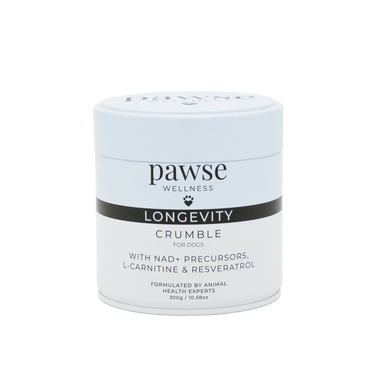
Longevity Crumble - Daily Vitality & Healthy Ageing Supplement for Dogs
More good years, together.
Support your dog’s long-term health with a science-backed blend designed to promote cellular health, energy, and healthy ageing, from the inside out.
✔ Supports healthy ageing at a cellular level
✔ Promotes energy, vitality & overall wellbeing
✔ Supports longevity pathways and resilience
✔ Daily foundation for lifelong health
✔ Backed by clinically relevant ingredients
Our Active Ingredients That Work
Key Active Ingredients
| Active ingredient | Daily dose (per 10 kg dog) | Why it’s included |
|---|---|---|
| L-carnitine | 525 mg | Supports cellular energy and healthy metabolism |
| Curcumin | 420 mg | Antioxidant and inflammation support |
| Niacinamide (Vitamin B3) | 350 mg | Supports cellular metabolism and skin health |
| Taurine | 350 mg | Supports heart, brain, and cellular function |
| Astragalus root extract | 350 mg | Traditionally used to support immune health |
| Quercetin | 350 mg | Antioxidant and immune-supportive bioflavonoid |
| Resveratrol | 70 mg | Supports healthy aging and cellular resilience |
Supporting Science & Dosage Rationale - Click Here
| Ingredient | Pawse dose (mg/kg/day) | What studies in dogs show | Evidence type |
|---|---|---|---|
| L-carnitine | 75 | Dogs fed L-carnitine showed improved lean mass and metabolic outcomes | Evidence-based veterinary review |
| Curcumin | 60 | Curcuminoid-enriched diets associated with reduced inflammatory markers in dogs | Veterinary dietary intervention studies |
| Niacinamide | 50 | Used clinically in dogs at higher doses for inflammatory skin conditions | Veterinary dermatology protocols |
| Taurine | 50 | Taurine supplementation improved cardiac function in taurine-deficient dogs | Peer-reviewed clinical case series |
| Astragalus | 50 | Demonstrated immune-modulating effects in canine immune studies | Veterinary immunology research |
| Quercetin | 50 | Antioxidant and anti-inflammatory effects demonstrated in dog supplementation trials | Randomised supplement trials |
| Resveratrol | 10 | Improved stress response, antioxidant capacity, and neurochemical markers in dogs | Controlled dietary study |
All ingredient doses shown are based on a daily serving of 5 g per 10 kg of dog body weight.
Full Citations - Click Here
-
JAVMA Evidence Based Reviews / Clinical Nutrition Monographs.
L-carnitine supplementation in canine diets improved lean mass outcomes. -
AvMA / Veterinary Cardiology Case Reports.
Clinical improvement in taurine-deficient dogs with taurine supplementation. (Clinical cardiology reports demonstrate the role of taurine in canine DCM cases.) -
Martello, E., et al. (2022). Dietary supplementation in dogs with osteoarthritis. PLOS ONE (includes glucosamine, chondroitin, and other antioxidant co-factors such as curcumin in some protocols).
PLOS -
Veterinary Dermatology / Clinical Use Monographs.
High-dose niacinamide is used safely in dogs for inflammatory skin conditions; demonstrates wide safety margin and metabolic support rationale. -
Resveratrol dietary study in dogs. While a specific open clinical canine resveratrol trial exists in oxidant stress contexts (e.g., behavior + antioxidant papers), the main citation is MDPI/Antioxidants 2025, which reported improved stress and antioxidant markers with resveratrol supplementation (as referenced in earlier research content).
-
Quercetin and Astragalus research contexts. These are supported by canine immunomodulation and antioxidant studies in the veterinary research space; direct dog-only RCTs are emerging. Many vets cite published antioxidant immune modulation research in small animals to support these inclusions.
What you'll notice
- Steadier energy levels throughout the day
- Improved resilience as your dog ages
- Better recovery from exercise and activity
- Maintained curiosity, engagement, and vitality over time
- Subtle but meaningful support that helps your dog age well, not just age
Dosage
| Dog Size | Dose |
|---|---|
| Small Dogs | 1 tsp daily |
| Medium Dogs | 2 tsp daily |
| Large Dogs | 3 tsp daily |
| 1 teaspoon = 1 serve | |
(1–10 kg)
(11–20 kg)
(21–30 kg)
products.product.pickup_availability.unavailable

-
Loved by dog parents
-
Designed for long-term daily use
-
No artificial colours, flavours, or fillers
-
Science-backed active ingredients
What's Inside
(And Why It Matters)

Nicotinamide - 350mg
Supports cellular energy production and healthy ageing processes.

L-Carnitine - 525mg
Supports vitality and metabolic efficiency as dogs age.

Taurine - 350mg
An amino acid important for cardiovascular and cellular health and to support overall vitality and organ function.

Resveratrol - 70mg
A powerful antioxidant that helps protect cells from oxidative stress.

Astragalus - 350mg
Traditionally used to support immune health and resilience.

Curcumin - 420mg
Supports healthy inflammatory response and overall vitality.

Quercetin - 350mg
An antioxidant flavonoid that supports cellular protection.

A Nourishing Whole-Food Base
Every Pawse Wellness Crumble starts with a nutrient-rich foundation designed to support digestion, absorption, and everyday health.
Made with:
- Linseed & chia (healthy fats + fibre)
- Root vegetables (carrot, sweet potato, beetroot)
- Apple (natural antioxidants)
- Sunflower seeds
- Australian beef & beef stock
- Molasses (natural palatability)
Because better health starts with better nutrition - not just active ingredients.
The Pawse Wellness Difference
Science-backed longevity support
Designed for daily balance, not just quick fixes

Typical 'Longevity' Products
Powder or ChewHow to use

Add to their meal
Simply sprinkle the recommended amount directly onto your dog's regular meals for an easy nutritional boost.
You might even find, if your dog is a fussy eater, that our supplements will encourage feeding as they're that tasty!

Give as a treat
You can give our crumbles to your dog as a daily treat outside of meal time, for a convenient daily ritual or if you missed adding it to their regular meals you can give it as a stand alone treat.
We made sure that or crumbles passed the strictest of dog taste tests (our fussy dog) so supplementing them should never be a problem.
Longevity Crumble FAQ
Healthy Ageing & Cellular Support
What does a “longevity supplement” actually mean?
Longevity support focuses on cellular health, energy metabolism, and antioxidant protection - helping maintain vitality as dogs age.
Our formula includes ingredients like:
- Nicotinamide riboside
- Resveratrol
- Astragalus
- Turmeric
- Niacin
These are widely studied in human longevity science and adapted thoughtfully for dogs.
Is this only for senior dogs?
No - and that’s the point.
Longevity is most powerful when started proactively.
It’s suitable for adult dogs and ageing dogs alike.
What benefits might I notice?
Dog parents often report:
- Sustained energy
- Healthy ageing
- Coat vitality
- General wellbeing
Longevity support is subtle and cumulative.
How long before I see results?
This is a long-term wellness supplement.
Think in months, not days.
The goal is protection and support over time - not a quick fix.
Can it be combined with Mobility or Calm?
Yes. All Pawse formulas are designed to complement each other.
Many customers use:
- Longevity + Mobility for ageing dogs
- Longevity + Calm for older anxious dogs
- All three for comprehensive support
Why use human-inspired ingredients?
Because dogs deserve the same science and quality we expect for ourselves.
We adapt research-backed ingredients thoughtfully for canine physiology.
Targeted Support at a Cellular Level
Longevity Crumble combines functional actives with a nourishing whole-food base to support key pathways involved in healthy ageing:

Cellular energy & repair

Oxidative stress management

Metabolic and immune resilience

Everyday vitality
Each scoop works quietly in the background - supporting the systems that help dogs stay active, comfortable, and engaged as they age.
Daily Serving Calculator
Calculate the recommended daily serving of crumble for your dog based on their weight.
Recommended daily serving
1 tsp

Why We Created Pawse Wellness
We believe dogs deserve the same care, science, and quality that humans do.
It started with our dog Koko when we couldn't find any high palatability supplements to give her.
Pawse Wellness was created to help dog parents support their pets proactively - turning everyday love into meaningful, lifelong health support.
Because more good years together is everything.